
Advice From The Kid Who Never Wanted This Job
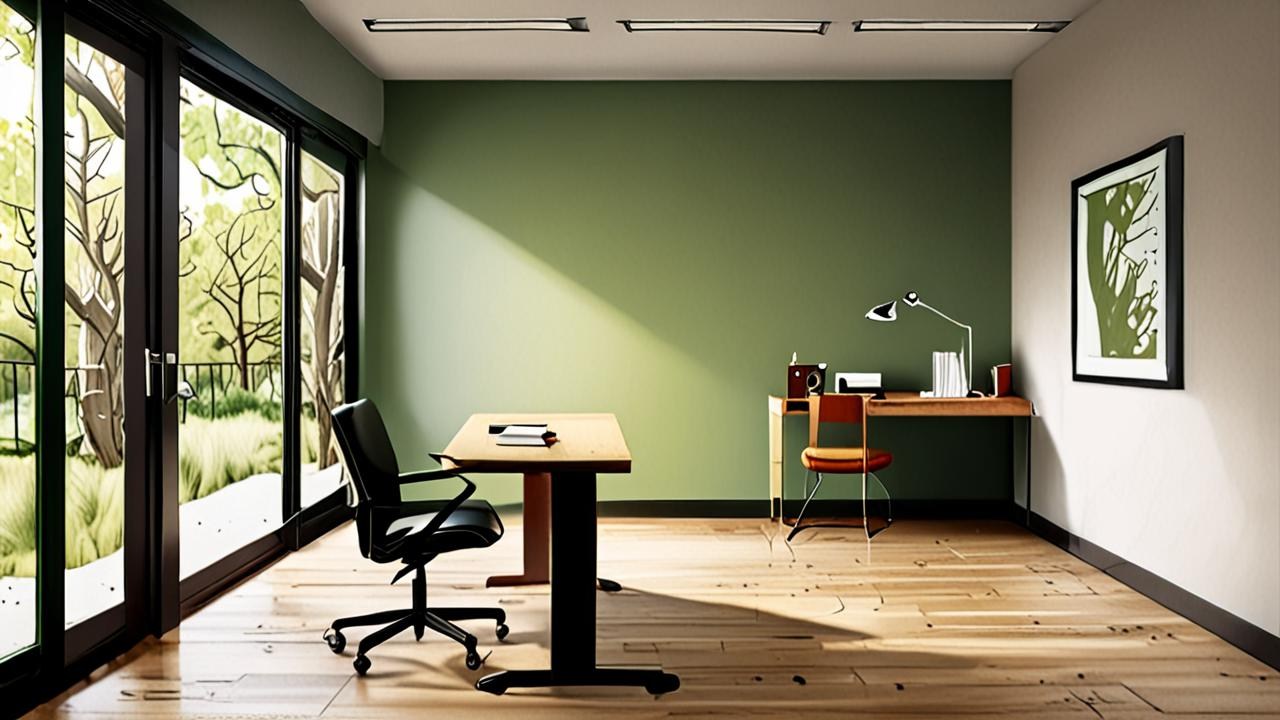
Software engineering is physical work, and the sooner you treat it that way the longer you get to do it. I have a bulging disc and carpal tunnel from a career spent sitting still and typing, and if I could hand my younger self one thing, it would be this: your body is the only production environment you cannot restore from backup. Break your posture slowly enough and nothing alerts you until the damage is structural.
I should say up front that I am not a doctor, and nothing here replaces one. If you have numbness in your hands, pain that travels down a limb, or a back that has stopped being merely sore, go and see someone qualified. What follows is the view of an engineer looking back, not medical advice.
The kid had three rules
When I was young I made three declarations. I would never work in software, never get married, and never live in Sydney. I have since done all three, and I would not undo any of them. The marriage turned out to be the best decision on the list, and the job has given me twenty-odd years of interesting problems.
So I suspect my younger self, if I could sit him down, would not lecture me about career choices. He would be a bit smug that he had been so spectacularly wrong about everything, and then he would look at how I sit and wince. His objection to software was probably never about the work. It was a hunch that spending your life hunched in front of a screen was a poor way to treat a body. On that point I think he was right, and I ignored him for two decades.
Why it creeps up on you
The trouble with this kind of injury is that it behaves like a slow memory leak. Nothing fails on any given day. You finish the sprint, ship the release, and feel fine. The cost accumulates in small unpaid instalments: a monitor a little too low, a wrist resting on a hard edge, three hours without standing because you were close to the answer.
Software makes this worse because the work rewards exactly the wrong behaviour. The best moments are deep concentration, the state where hours disappear. Nobody in that state is reassessing their shoulders. Our culture quietly praises it, too. The engineer who stays locked in until the problem falls over is the hero of the story, and the story never mentions what their lower back thought about it.
Then there is the commercial pressure, which I understand better than most. Deadlines are real, customers are waiting, and there is always one more thing. But I have come to see the maths differently. A career is a long game, and a body that cannot sit through a working day is a far more expensive constraint than a slipped release. Delivery can be recovered. A spine does not renegotiate.
What I would do differently
First, I would take my eyes off the screen on purpose and often. Staring at something a short distance from your face for hours is hard on your eyes, and the usual advice is a simple rhythm: every twenty minutes or so, look at something far away for twenty seconds or more. It sounds too trivial to matter, which is exactly why nobody does it. I would set a timer I could not argue with, and I would stop treating a glance out the window as slacking off. Looking at the horizon is maintenance, the same as patching a server.
Second, I would walk outside every day, properly outside, not just to the kitchen and back. Daylight, distance and movement do things for a tired head that another coffee does not. Some of the best answers I have found arrived after I walked away from the problem, which is a poor reward for the hours I spent forcing it at a desk. I would treat the walk as part of the engineering, not a break from it.
Third, I would fix my setup before I needed to. The screen at eye level, the keyboard and mouse placed so my wrists stay neutral instead of bent, a chair that supports the lower back, feet flat, and the ability to alternate between sitting and standing. None of this is exotic, and most of it is cheap compared with what we spend on a second monitor or a nicer keyboard for the look of it. Carpal tunnel in particular is often a story about sustained awkward angles and repetition, and my hands would have thanked me for taking the boring ergonomic basics seriously a decade earlier.
Fourth, I would build strength and movement in as a habit rather than a rescue. Core and back strength, mobility, a bit of stretching, and regular breaks to stand up. If a team agreed to refactor a fragile module because it was getting dangerous, we would call that responsible. Doing the equivalent for your own frame is just as sensible, and far harder to retrofit.
Finally, I would listen to early signals. A tingle, a stiff patch or a recurring ache is the equivalent of a warning in the logs. We have all seen what happens to systems where warnings are filtered out because they are noisy. I filtered mine for years. The advice from people who treat this properly is to deal with it while it is cheap, and I wish I had.
The part that is not about furniture
There is a human reason underneath all of this, and it is the one that matters most to me. I want to be around for my family, and I want to be able to play with my boys, take the dog for a walk, and sit through a church service or a flight without calculating how long I can last. A body that works is not a productivity input. It is the thing that lets you enjoy the life the work is meant to pay for.
That reframing helped me more than any ergonomic chair could. It is easy to defend a stretch break when the alternative is a hurting back at the weekend, and it is easy to see what the extra hour at the desk really costs. The trade is rarely one hour of output against nothing. It is one hour of output against some future afternoon spent flat on the floor.
What I would tell the kid
If he were listening, I think I would say something like this: you were right to be suspicious of the job, but wrong about what to be suspicious of. The work is good. The sitting is the hazard. Keep the job, get married, and yes, even move to Sydney, but move more, look up, and treat your wrists and your back with the respect you would give any system you were responsible for keeping alive for decades.
I did not do that, and I am managing the consequences now. The good news is that it is rarely too late to start. If you are early in your career, you have the best possible advantage: time. Spend a little of it now, while it is cheap, and your future self will be far more interested in the interesting problems and far less interested in the physiotherapist.

Share your thoughts